HVAC & Ductwork Mold Remediation Cost
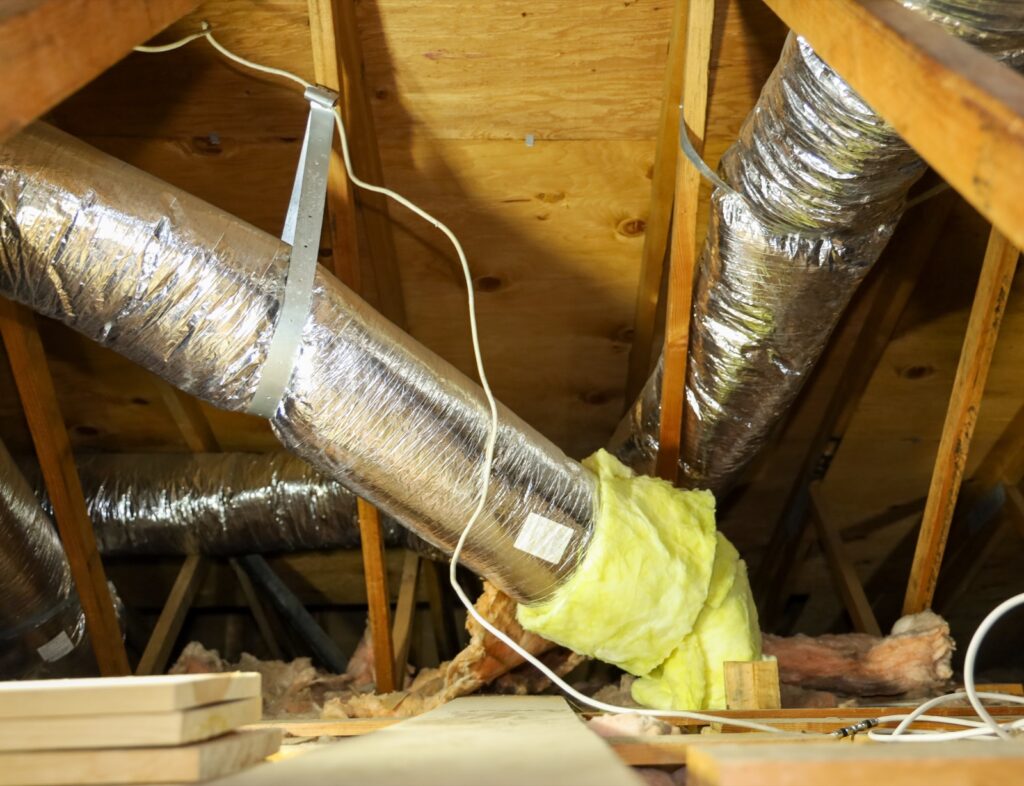
Mold in the HVAC system is the scope people underestimate, because the mold isn’t in a room — it’s in the thing that moves air to every room. That’s what makes it both a health-adjacent concern homeowners take seriously and a job that’s harder to price than a wall or a ceiling. The cost turns on where in the system the growth is, whether the ductwork can be cleaned or has to be replaced, and whether the equipment created the moisture problem in the first place.
Midpoint $3,607. The range moves by metro with local labor and cooling season length. See the Atlanta breakdown, or pick your metro for a local number.
Why HVAC systems grow mold
An air conditioner’s entire job is to pull moisture out of the air, which means the system is wet by design — and anywhere it’s wet and dark, mold can grow. The usual sites:
- The evaporator coil and drain pan. The coil condenses water out of the air; that water is supposed to drain away. A clogged condensate line or a rusted pan lets it pool, and the coil and pan grow biofilm and mold.
- The air handler and blower. Cool, damp interior surfaces downstream of the coil stay wet through the cooling season.
- Ductwork, especially flex duct and internally-lined metal duct, where dust settles on damp surfaces. Ducts that run through a hot attic or a damp crawl space sweat on the outside and collect moisture inside.
- An oversized system, which cools the air fast but runs too briefly to dehumidify it, leaving the whole house — and the ducts — more humid than they should be.
Because the blower pushes air across all of this, a contaminated system distributes spores and that characteristic musty smell every time it runs. That’s why an HVAC job is often flagged when the visible mold elsewhere in the house seems minor.
Signs of HVAC or duct mold
Mold in the system tends to make itself known through the air rather than the eye:
- A musty smell that comes on when the system runs and fades when it’s off;
- Visible growth on the registers, the drip pan, or inside accessible ductwork;
- Water around the air handler, or a clogged condensate line;
- Dust or debris blowing from the vents;
- Damp ducts running through an attic, crawl space, or other unconditioned area.
Why it costs what it does
- Clean vs. replace. The coil, blower, and accessible metal duct can often be cleaned, treated, and returned to service — the low-to-middle of the range. Flex duct and internally-lined duct that’s contaminated generally can’t be cleaned to standard and gets replaced, and re-ducting a house is where the number climbs.
- System access. Cleaning a coil properly can mean pulling it; reaching duct runs means working in the attic or crawl space the ducts pass through, which stacks the access difficulty of those spaces onto the HVAC job.
- The moisture source. Clearing a condensate drain is cheap; correcting an oversized or mis-configured system, adding a whole-house dehumidifier, or fixing ducts that sweat is not — and without it, the system re-contaminates.
What an HVAC remediation usually includes
- Assessment of the coil, drain pan, air handler, blower, and the accessible duct runs;
- Containment and negative air so cleaning doesn’t push spores through the supply registers;
- HEPA cleaning and antimicrobial treatment of the coil, pan, blower, and cleanable duct, or removal and replacement of duct that can’t be cleaned;
- Clearing or re-routing the condensate drain and correcting standing water;
- New filtration, and post-remediation verification with the system running.
A note on scope: some “duct cleaning” services blow debris around without containment or verification. Mold remediation of an HVAC system is a different, more controlled job, and the two shouldn’t be confused on a quote.
When it’s bigger than it looks
The number escalates when the ductwork is flex or lined and has to be replaced throughout, when the growth has spread from the system into the cavities the ducts run through (a crawl space or attic job piggybacks on the HVAC job), when the coil or air handler is old enough that replacing the equipment is more sensible than cleaning it, or when the real fix is a system that’s wrong for the house — oversized, poorly configured, or lacking dehumidification. In humid metros, adding a dedicated dehumidifier is often the durable answer, and it’s a separate line from the remediation.
How to read an HVAC quote
Ask the crew to break out what’s cleaned (coil, pan, blower, metal duct), what’s replaced (flex/lined duct, filters, and any equipment), and the moisture correction (condensate, configuration, dehumidification) as separate items. That structure tells you whether you’re buying a real remediation or a glorified duct cleaning, and it’s where a mid-range job and a full re-duct diverge. Our modeled range covers the remediation scope; equipment replacement and whole-house dehumidification are additional.
Preventing HVAC mold
HVAC mold is a condensation problem, so prevention is about keeping the system dry:
- Keep the condensate drain pan and line clear so water doesn’t sit;
- Manage indoor humidity;
- Change filters and service the equipment on schedule;
- Seal and insulate ducts in unconditioned spaces to limit condensation.
Find your local number
HVAC remediation costs track local labor and the length of your cooling season — a system in a hot, humid metro runs wetter for more of the year. Choose your metro for a modeled range built from your area’s wages and climate. If the ducts run through an attic or crawl space that’s also affected, the related guides cover those scopes.
Common questions
How much does HVAC or ductwork mold removal cost?
HVAC jobs are among the pricier scopes because the work spans the ducts and equipment, not a single surface; the modeled range here reflects local labor. Cleaning versus replacing ductwork is the main swing factor. Pick your metro for a local range.
Can I clean HVAC or duct mold myself?
This is generally not a do-it-yourself job. Ducts and equipment are hard to access and easy to recontaminate, and cleaning the system incorrectly can spread spores through the home. It is usually handled by a professional.
Does insurance cover HVAC mold?
Typically only when a sudden, covered event introduced the moisture. Ongoing condensation or humidity is usually excluded. Check your policy and ask your insurer.
What drives HVAC remediation cost?
Whether ductwork and equipment can be cleaned or must be replaced, the size and layout of the system, and access. A single-zone system is cheaper than a large or multi-zone one.
How do I keep HVAC mold from returning?
Control moisture in the system: keep the drain pan and condensate line clear, manage indoor humidity, and service the equipment on schedule so condensation does not sit on cool surfaces.
More cost guides
Attic Mold Remediation Cost
What drives the price of attic mold remediation — ventilation, roof leaks, and how much sheathing has to come out.
Read →Basement Mold Remediation Cost
Finished vs. unfinished is the biggest lever in a basement mold job — plus drainage, contamination class, and what a…
Read →Bathroom Mold Remediation Cost
Most bathroom mold is a surface job; the cost jumps only when water gets behind the tile or drywall. How…
Read →Crawl-Space Mold: What Remediation Costs, and Why
The crawl space is where mold remediation gets expensive. It’s the scope that most often turns a four-figure job into…
Read →Drywall vs. Framing: What Has to Come Out
The cost driver behind every scope — whether contaminated material is cleaned and kept or removed and rebuilt.
Read →