Crawl-Space Mold: What Remediation Costs, and Why
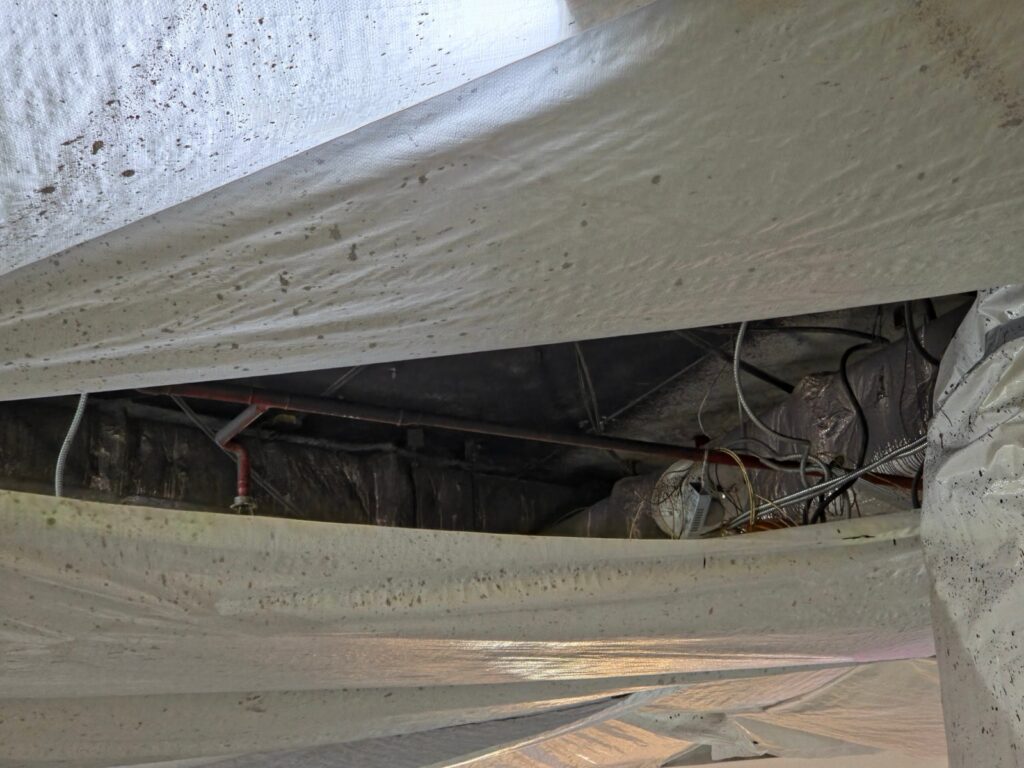
The crawl space is where mold remediation gets expensive. It’s the scope that most often turns a four-figure job into a five-figure one — not because the mold is different, but because of where it sits and what a crew has to move to reach it. Here’s what drives the cost, what a job includes, and how to read a quote.
Midpoint $2,988. The range shifts by metro with local labor, housing age and moisture load. See the Atlanta breakdown, or pick your metro for a local number.
Why crawl spaces grow mold
A vented crawl space sits below the living area, close to ground moisture and open to humid outside air for much of the year. Warm, damp air meets cooler surfaces — joists, subfloor, the underside of the insulation — and condenses. Add a plumbing leak, poor drainage, or a missing vapor barrier and the wood stays damp long enough for mold to establish on the cellulose it feeds on. In humid metros that window runs most of the year, which is why we weight cost by local climate; the methodology explains how.
Signs of crawl-space mold
Most people never look in the crawl space, so problems announce themselves upstairs first:
- A musty smell rising into the rooms above;
- Cupping, soft spots, or a springy feel in the floor over the crawl;
- Standing water, damp soil, or a torn or sagging vapor barrier;
- Dark growth or white fuzz on the joists, subfloor, or insulation;
- Condensation on ducts, pipes, or the underside of the subfloor.
Why it costs what it does
Square footage matters less than three things:
- Access. A crew works on their back in a confined, low-clearance space, often hauling material out through a single small hatch. Labor hours per square foot run far higher than in an open room.
- What has to come out. Contaminated insulation, the old vapor barrier, and sometimes surface wood all have to be removed, bagged and disposed of before anything can be cleaned.
- Containment and cleanup. Sealing the space, running air filtration, HEPA-vacuuming and treating the framing, then re-laying a vapor barrier — and often encapsulating — is where the hours add up.
What a crawl-space job usually includes
- Assessment and moisture-source identification;
- Containment and negative-air setup;
- Removal of contaminated insulation and vapor barrier;
- HEPA cleaning and treatment of joists and subfloor;
- A new vapor barrier, and often encapsulation;
- Post-remediation verification.
Fixing the reason the space was wet — grading, a sump, a failed seal — is usually quoted separately, and skipping it is how a job comes back.
When it’s bigger than it looks
A crawl-space quote climbs fast when growth has moved from the surface into structural wood, when joists or subfloor need treatment or partial replacement, or when HVAC equipment and ductwork in the crawl have to be cleaned or replaced. Contamination class — how far it has spread, and whether it sits behind finished surfaces — drives price harder than the footprint of the space.
Reading a crawl-space quote
Ask for line items: remediation (everything above) separate from any rebuild, and the moisture fix separate from both. A quote that bundles it all into one number is hard to compare and easy to pad. Our modeled range covers the remediation scope only — rebuild and the moisture correction are additional.
Preventing crawl-space mold
Because the fix and the prevention are the same, a remediated crawl stays clean only if the moisture path is closed:
- Lay and seal a sound vapor barrier over the soil;
- Grade and drain so water doesn’t pool under the house, and keep gutters directing water away;
- Control the humid air that enters through vents — or encapsulate and condition the space;
- Check the barrier and for standing water a couple of times a year.
Find your local number
Crawl-space costs move with local wages and how humid your market is. Choose your metro for a modeled range built from your area’s wages and climate, then use it to sense-check any quote you get.
Common questions
How much does crawl-space mold remediation cost?
Crawl-space jobs vary widely; the modeled range on this page reflects local labor and how much has to come out. Removing contaminated insulation and the old vapor barrier, then re-laying a barrier or encapsulating, is where the hours add up. Pick your metro for a local range.
Does insurance cover crawl-space mold?
Usually only when a sudden, covered event caused it — not ground moisture, humidity, or drainage problems. Check your policy and ask your insurer.
Can I do crawl-space mold removal myself?
The EPA suggests small areas under about 10 square feet can be a do-it-yourself job, but crawl spaces are confined, hard to work in, and usually involve porous wood and a moisture problem — which is why most are handled professionally.
Why are crawl-space jobs so variable in price?
Access and what has to be removed. A crew works on their back in a low, tight space, often hauling material out through a single hatch, and contaminated insulation and vapor barrier removal, cleaning, a new barrier, and often encapsulation all add hours.
How do I keep crawl-space mold from coming back?
Address the moisture: a sound vapor barrier, good drainage and grading, and control of humid air entering through vents. Remediation before the source is fixed is a repeat visit.
More cost guides
Attic Mold Remediation Cost
What drives the price of attic mold remediation — ventilation, roof leaks, and how much sheathing has to come out.
Read →Basement Mold Remediation Cost
Finished vs. unfinished is the biggest lever in a basement mold job — plus drainage, contamination class, and what a…
Read →Bathroom Mold Remediation Cost
Most bathroom mold is a surface job; the cost jumps only when water gets behind the tile or drywall. How…
Read →Drywall vs. Framing: What Has to Come Out
The cost driver behind every scope — whether contaminated material is cleaned and kept or removed and rebuilt.
Read →HVAC & Ductwork Mold Remediation Cost
Mold in the coil, air handler, and ductwork — clean vs. replace, the moisture source, and how to read an…
Read →