Bathroom Mold Remediation Cost
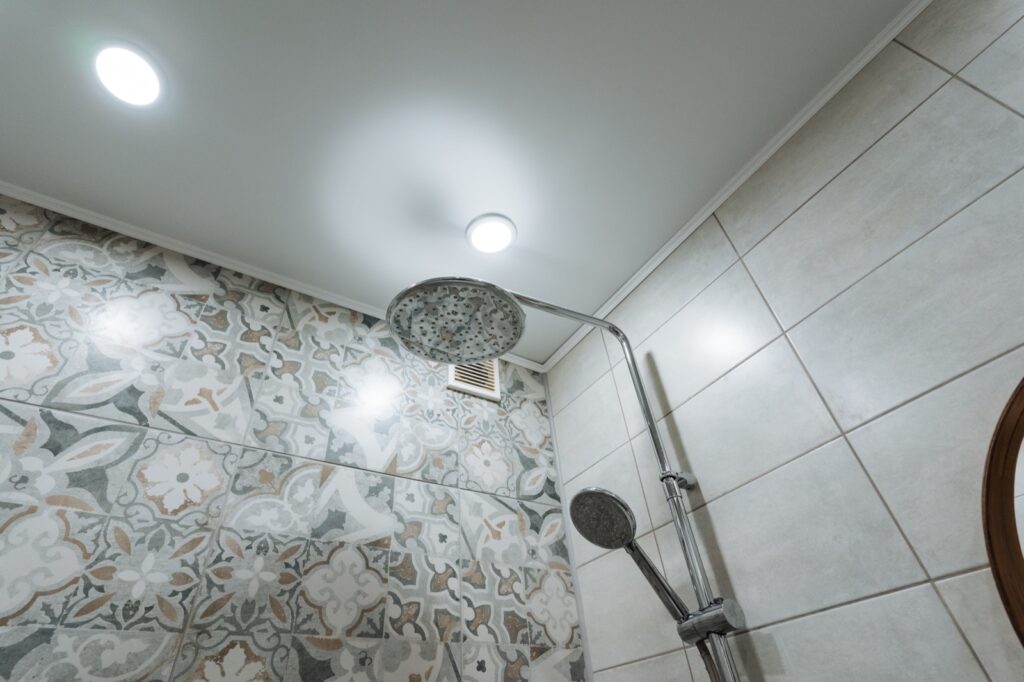
Bathroom mold is the kind most people meet first — the black speckling along a shower ceiling, the grout lines, the corner behind the toilet. Most of it is a surface problem you can handle yourself. The reason a bathroom sometimes turns into a real remediation bill is that a bathroom is a wet room built over hidden framing, and when water gets behind the tile or the drywall, the cost stops being about the room you can see.
Midpoint $808 — the figure for professional surface remediation of a single room. Behind-the-wall damage moves the job toward the larger scopes. Pick your metro for a local number.
Surface mold vs. the hidden kind
The single most useful thing to understand about bathroom mold is that there are two very different situations, and they cost an order of magnitude apart.
- Surface growth on grout, caulk, painted drywall, or a ceiling is feeding on soap film and a humid room, not on failed waterproofing. It wipes off, and it’s the low end of the range — often a homeowner job, and rarely more than a single-room professional cleaning if you’d rather not.
- Hidden growth behind the tile, under the vanity, in the subfloor, or inside the wall cavity means water has gotten past the waterproofing — a failed shower pan, a leaking supply or drain line, or a gap in the tile that’s been wicking for months. Now the fix involves opening walls or floors, and the price climbs toward the crawl-space, basement, or whole-house scopes depending on how far it traveled.
The tell is usually indirect: a soft spot in the floor, a stain on the ceiling of the room below, a musty smell that returns no matter how often you clean, or grout and caulk that keep failing in the same place. Those point to water behind the surface, not on it.
Signs of bathroom mold
Bathrooms show mold earlier than most rooms because you’re in them daily. Look for:
- Black or pink specks in grout lines, along the caulk, or on the ceiling above the shower;
- A musty smell that lingers after the room has dried;
- Peeling paint or bubbling around the tub, shower, or window;
- Soft, stained, or discolored drywall behind the tile or under the sink;
- Recurring condensation on the walls and mirror.
Surface specks are usually a quick fix; soft or stained drywall means the growth has moved behind the surface, which is where the cost climbs.
Why the surface job costs what it does
A single-room surface remediation is the smallest scope in the model, and the cost reflects a short, contained job: a two-person crew for a few hours, light containment, an air scrubber, HEPA cleaning of the affected surfaces, treatment, and verification. The materials and disposal are minimal because little or nothing is being demolished. What you’re paying for is correct technique — not spreading spores while cleaning — and confirmation that the growth is genuinely surface-only.
Where even a “small” bathroom job drifts upward: popcorn or textured ceilings that can’t just be wiped, growth that has reached paper-faced drywall (which usually gets cut out rather than cleaned), and the near-universal need to address the reason the room stays wet in the first place.
What a bathroom remediation includes
- Assessment to confirm whether growth is surface-only or fed by a leak behind the finishes;
- Light containment and an air scrubber to keep spores out of the rest of the house;
- HEPA cleaning and treatment of tile, grout, painted surfaces, and the ceiling, or removal of drywall sections where the facing is contaminated;
- Correcting the moisture load — almost always an exhaust-fan issue — and post-remediation verification.
If the job opens up to reveal a failed pan or a supply leak, the plumbing repair and the rebuild (new backer board, tile, flooring) are separate from the remediation, and they’re usually the larger numbers.
The ventilation fix that prevents the repeat
Most recurring bathroom mold is a ventilation problem. A fan that’s undersized, that vents into the attic instead of outside, or that simply never gets turned on leaves the room humid long after a shower — and a humid room grows mold on schedule. Correcting the fan (right size, ducted to the exterior, on a timer or humidistat) is a small line item that does more to prevent recurrence than any coating. It’s worth asking any remediator to include it, and worth doing even if you clean the surface yourself.
How to read a bathroom quote
For a surface job, the quote should be simple: containment, cleaning and treatment of the named surfaces, the fan fix, and verification. Be cautious of a quote that jumps to opening walls without first showing you evidence of a hidden leak — a moisture-meter reading, a stain below, a soft floor. Conversely, if there is evidence of water behind the surface, a quote that only cleans what’s visible is treating the symptom; ask what happens behind the tile. Our modeled surface range covers the visible-mold, single-room job; anything behind the waterproofing moves into a larger scope.
Find your local number
A surface bathroom job varies less by metro than the bigger scopes, but local labor still moves it. Choose your metro for a modeled range, and if you suspect the problem is behind the wall or in the floor, the related guides — drywall, crawl space, basement — cover where the cost goes next.
Common questions
How much does bathroom mold removal cost?
Surface mold in a bathroom is often one of the cheaper jobs; the modeled range here reflects local labor. Cost climbs when growth has moved behind tile, drywall, or the tub surround and material has to be opened up and rebuilt. Pick your metro for a local number.
Can I remove bathroom mold myself?
Small, surface areas on hard, non-porous surfaces (tile, grout, glass) under about 10 square feet are often a do-it-yourself clean-up, per EPA guidance. Growth on or behind drywall, or that keeps returning, is a stronger reason to bring in a professional.
Does insurance cover bathroom mold?
Generally only when it results from a sudden, covered leak — not everyday shower humidity or a slow drip. Check your policy and ask your insurer.
What makes a bathroom job more expensive?
Hidden growth. Surface cleaning is inexpensive, but once mold is behind tile or in the drywall, the scope includes removal, cleaning, and rebuild — and finding and fixing the leak or ventilation gap that caused it.
How do I prevent bathroom mold?
Move moisture out: run an exhaust fan that vents outside during and after showers, wipe down wet surfaces, and repair leaks and failed caulk promptly.
More cost guides
Attic Mold Remediation Cost
What drives the price of attic mold remediation — ventilation, roof leaks, and how much sheathing has to come out.
Read →Basement Mold Remediation Cost
Finished vs. unfinished is the biggest lever in a basement mold job — plus drainage, contamination class, and what a…
Read →Crawl-Space Mold: What Remediation Costs, and Why
The crawl space is where mold remediation gets expensive. It’s the scope that most often turns a four-figure job into…
Read →Drywall vs. Framing: What Has to Come Out
The cost driver behind every scope — whether contaminated material is cleaned and kept or removed and rebuilt.
Read →HVAC & Ductwork Mold Remediation Cost
Mold in the coil, air handler, and ductwork — clean vs. replace, the moisture source, and how to read an…
Read →